

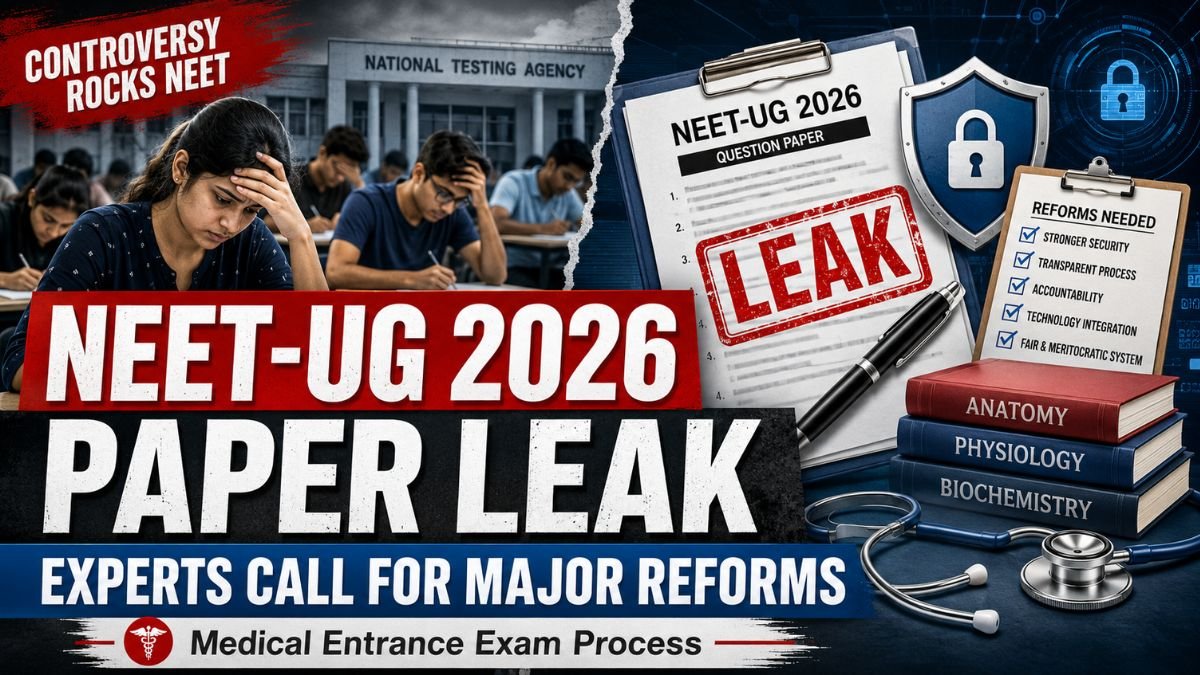
The alleged NEET-UG 2026 paper leak has once again raised serious concerns over the transparency, security and fairness of India’s medical entrance examination system.
Following reports of malpractice and exam irregularities, experts and medical education activists have called for urgent reforms to prevent similar incidents in the future.
Suggestions include compulsory registration of all medical entrance coaching centres, shifting NEET-UG to a computerised examination format, and exempting State-government controlled medical seats from the single-window national entrance system.
Experts Raise Concern Over NEET-UG Exam Process
Experts believe that repeated allegations of paper leaks and fraud have damaged public confidence in the NEET system. Since NEET-UG determines admission to undergraduate medical courses across the country, any irregularity can affect lakhs of students and their families.
Medical education observers say that entrance examinations must be conducted with the highest level of security because students spend years preparing for them.
A paper leak or cancellation not only causes emotional stress but also raises questions about administrative accountability.
Call for Computerised NEET-UG Exam
One of the key reform suggestions is to conduct NEET-UG as a computerised entrance examination. Experts argue that a digital exam system could reduce the risk of question paper leaks, improve monitoring and make the process more secure.
A computer-based test may also allow better control over question distribution, candidate verification and exam-day supervision. Supporters of the proposal believe that technology can help reduce human interference and prevent organised malpractice.
However, any move toward a fully computerised exam would also require proper infrastructure, especially in rural and semi-urban areas. Experts say the government must ensure equal access for all students before making such a transition.
Coaching Centres May Face Stricter Rules
Another major suggestion is compulsory registration of all medical entrance coaching centres. Experts say coaching centres play a major role in NEET preparation, and therefore they should be brought under stricter regulation.
Mandatory registration could help authorities monitor coaching institutions, prevent suspicious activities, and ensure greater accountability. It may also help protect students from misleading claims, high fees and unethical practices.
Supporters of this reform believe that regulating coaching centres could reduce the influence of commercial pressure in medical entrance preparation.
Demand to Exempt State-Government Medical Seats
Experts have also suggested that State-government controlled undergraduate, postgraduate and super-specialty medical seats should be exempted from the single-window national entrance system.
According to this view, states should have more control over admissions to government medical seats under their jurisdiction. Those supporting this demand argue that centralised exams may not always reflect regional educational realities and could disadvantage students from certain backgrounds.
They believe that giving states greater authority could help reduce pressure on a single national examination and create a more balanced medical admission system.
Doctors’ Group Calls It Administrative Failure
Doctors’ Association for Social Equality general secretary G.R. Ravindranath strongly criticised the handling of the NEET-UG 2026 exam issue. He said the alleged fraud and paper leak should be seen not only as malpractice but also as an administrative failure.
He condemned the Central Government over what he described as negligent handling of the examination process. According to him, students should not be forced to suffer because of lapses in exam security and management.
Impact on Students
The NEET-UG paper leak controversy has caused anxiety among medical aspirants. Students prepare for years with the hope of securing admission to MBBS, BDS and other medical courses. Any uncertainty around the exam creates stress, confusion and financial pressure.
Many students also travel long distances, pay coaching fees and make major personal sacrifices for the exam. When the process is questioned, it affects not only results but also trust in the system.
Why Reform Is Needed
The controversy has intensified the debate over whether the current NEET system is strong enough to prevent malpractice. Experts say reforms should focus on exam security, transparency, accountability and student protection.
Better technology, stricter supervision, regulated coaching centres and clearer responsibility at every administrative level may help restore confidence.
Conclusion
The alleged NEET-UG 2026 paper leak has triggered fresh calls for reform in India’s medical entrance examination system.
Experts have suggested computerised testing, compulsory registration of coaching centres and exemption of State-government controlled medical seats from the single-window national process.
Doctors’ groups and education experts argue that the issue reflects serious administrative failure and must not be treated lightly.
For lakhs of medical aspirants, a fair and secure examination system is essential. The controversy now puts pressure on authorities to strengthen NEET’s credibility and protect students from future malpractice.