

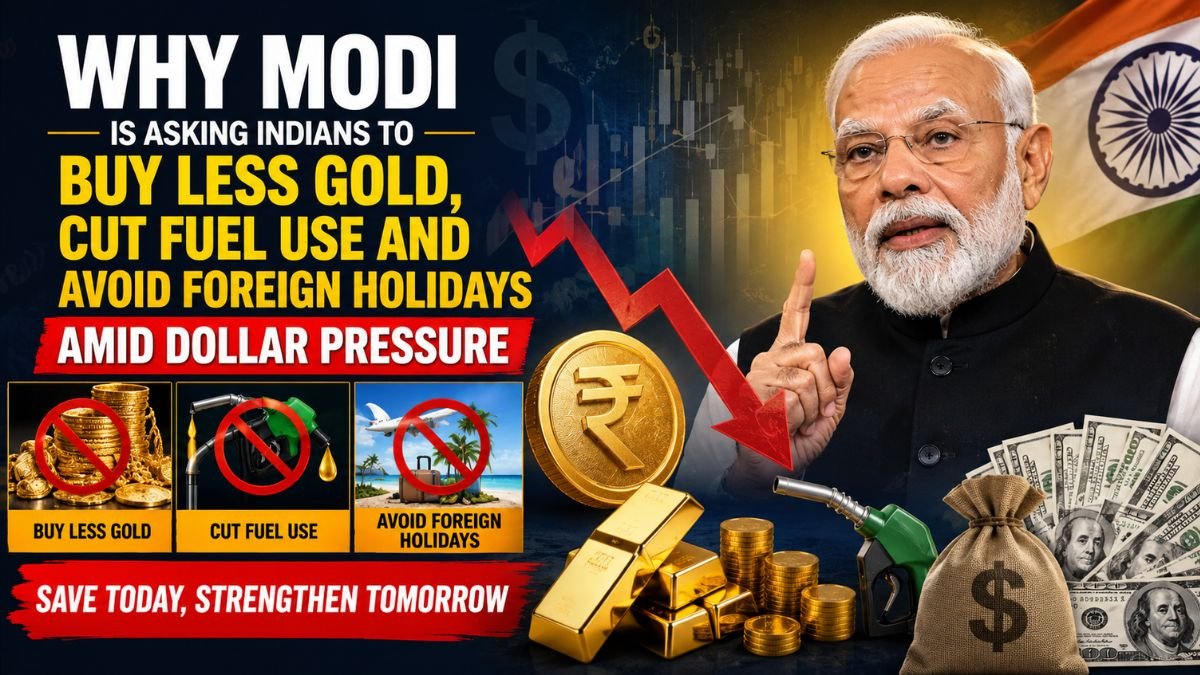
Prime Minister Narendra Modi has urged Indians to reduce gold purchases, avoid unnecessary foreign travel, use less fuel and work from home where possible.
The appeal comes at a time when India is facing growing pressure from rising global energy costs, a weaker rupee and increased demand for foreign currency.
The message has reminded many people of the pandemic period, when citizens were asked to make collective sacrifices for the national interest.
This time, however, the focus is economic stability. The government wants to reduce the demand for dollars and protect India’s foreign exchange position.
Why India Is Worried About Dollar Demand
India depends heavily on imports for its energy needs. The country imports around 90% of its crude oil and about half of its gas requirement. When global oil prices rise, India has to spend more dollars to buy fuel from abroad.
The ongoing crisis in the Middle East has made the situation more difficult. Higher crude prices, costlier gas, expensive fertilisers and increased gold imports are all adding pressure to India’s import bill.
Although India has large foreign exchange reserves, economists say the concern is not an immediate shortage of dollars.
The bigger worry is that dollar demand is rising faster than supply, which can weaken the rupee and increase inflation.
Why Gold Purchases Are Under Focus
Gold has always been popular in India, especially during weddings, festivals and family investments. But gold is also a major import item, which means large purchases increase the demand for foreign currency.
To reduce this pressure, the government has reportedly raised import duties on gold and silver. Modi’s appeal to buy less gold is part of a larger effort to reduce unnecessary imports and protect the country’s external finances.
For households, this may feel like a personal sacrifice. But from the government’s point of view, lower gold demand can help reduce pressure on the rupee and foreign exchange reserves.
Foreign Holidays and Fuel Use Also Add Pressure
Foreign travel is another area where Indians spend dollars. When more people travel abroad, they spend on flights, hotels, shopping and services in foreign currency. Cutting unnecessary overseas trips can reduce outward dollar flow.
Fuel consumption is also a major concern. Higher petrol, diesel and LPG consumption increases India’s crude oil demand. If global oil prices remain high, every extra barrel imported adds to the financial burden.
That is why the government is encouraging people to use public transport, carpool, work from home and reduce fuel use wherever possible.
Rising Oil Prices Could Affect Consumers
For some time, the government absorbed part of the global price shock to protect consumers. But this approach becomes difficult when crude prices stay high for long.
India recently raised petrol and diesel prices after a long pause, signalling that consumers may now have to share some of the burden.
Economists argue that artificially holding down fuel prices for everyone can increase pressure on government finances and state-run oil companies.
Targeted relief for poorer households may be more sustainable than keeping fuel cheap for all consumers.
Bigger Challenges for the Rupee and Economy
The rupee has already faced pressure due to foreign investor outflows, slower exports and global uncertainty. If the rupee weakens further, imports become more expensive, which can push inflation higher.
Economists say India may have to accept some economic pain as part of adjustment. Higher prices can reduce demand, while a weaker rupee can make exports more competitive over time. However, a sharp fall in the rupee also carries political and public confidence risks.
Conclusion
Modi’s call for Indians to buy less gold, travel abroad less and reduce fuel use reflects deeper concerns about India’s external finances.
The issue is not just personal spending. It is about managing dollar demand, protecting the rupee and reducing pressure from expensive imports.
While patriotic restraint may help, economists believe India will also need practical policy measures, targeted subsidies and long-term energy reforms.
If global oil prices remain high, the financial burden will eventually reach households, businesses and the government alike.