

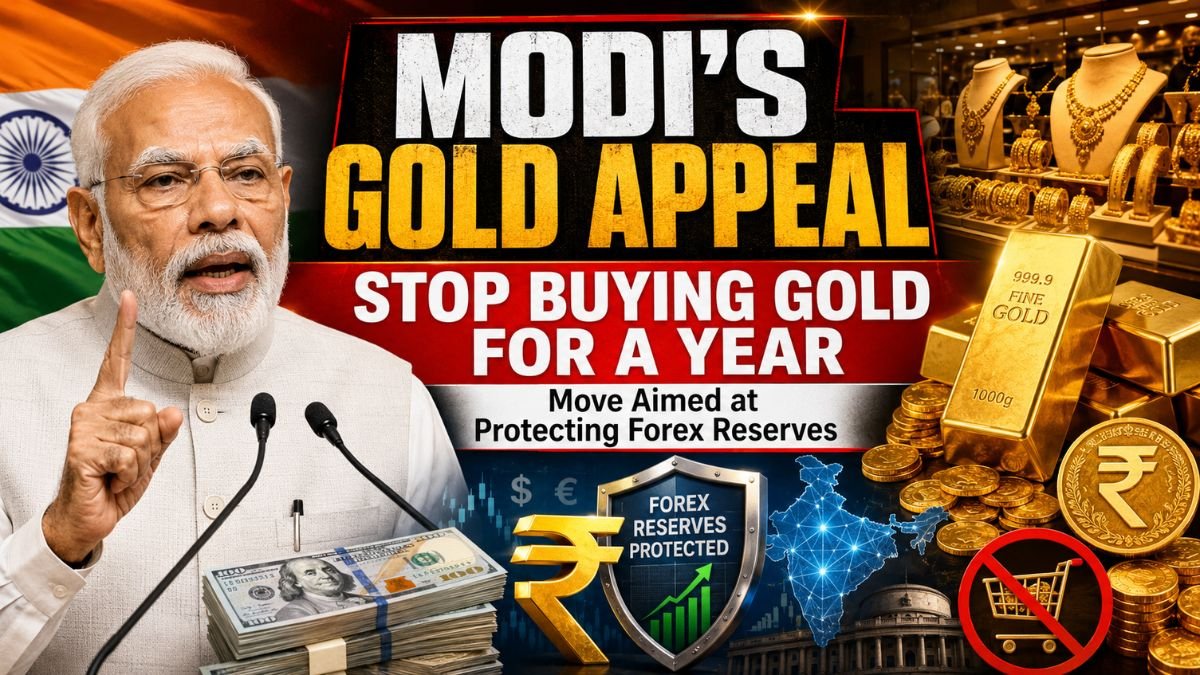
Prime Minister Narendra Modi has urged Indians to avoid buying gold jewelry for at least one year, making a striking appeal in a country where gold holds deep cultural, emotional, and financial importance.
The request comes as the government looks to reduce pressure on foreign-exchange reserves and control spending on non-essential imports.
Gold is not just a luxury item in India. It is closely linked with weddings, festivals, family savings, and religious traditions.
Because of this, Modi’s appeal has drawn attention from consumers, traders, and investors, especially as jewelry-related stocks came under pressure after the remarks.
Modi’s Appeal to Indian Citizens
Speaking on Sunday, Modi asked citizens to avoid purchasing gold jewelry for a year, even during family functions and celebrations.
He said India spends a large amount of money importing gold, and people should reduce non-essential purchases to help protect the country’s foreign-exchange position.
His message was not limited to gold. Modi also urged Indians to cut fuel consumption and avoid unnecessary overseas travel.
The broader appeal focused on reducing expenses that increase import bills and put pressure on national reserves.
Why Gold Imports Matter for India
India is one of the world’s biggest consumers of gold. Since domestic production is limited, the country depends heavily on imports to meet demand.
This means large gold purchases can increase India’s import bill and affect the country’s current account balance.
When gold imports rise sharply, more foreign currency leaves the country. This can place pressure on the rupee and reduce foreign-exchange reserves.
By asking people to delay gold purchases, Modi is encouraging citizens to support economic stability through personal spending choices.
Cultural Importance of Gold in India
The appeal is significant because gold plays a major role in Indian society. Families often buy gold for weddings, festivals, religious ceremonies, and long-term savings. For many households, gold jewelry is seen as both tradition and financial security.
This makes the request challenging. Avoiding gold purchases for a full year could affect wedding shopping, festive buying, and family investment habits.
However, the government’s message suggests that temporary restraint could help the country manage external financial pressure.
Impact on Jewelry Stocks
Modi’s remarks also affected market sentiment toward jewelry companies. Investors became concerned that a public appeal to reduce gold purchases could weaken demand in the jewelry sector.
Jewelry retailers depend heavily on seasonal buying, especially around weddings and festivals. If consumers follow the appeal seriously, sales could slow, affecting revenue expectations for listed jewelry firms. This is why jewelry stocks may face pressure after such a statement.
A Call for Economic Discipline
The appeal reflects a broader message of national economic discipline. By asking people to reduce gold buying, fuel use, and unnecessary foreign travel, Modi is urging citizens to think about how individual spending affects the wider economy.
The message is simple: reducing non-essential imports can help conserve foreign exchange and strengthen the country’s financial position.
Conclusion
Prime Minister Narendra Modi’s call for Indians to avoid buying gold jewelry for a year is a major appeal in a country where gold is deeply tied to culture and savings.
While the request may be difficult for many households, it highlights concerns over import costs and foreign-exchange reserves.
The move could also affect jewelry demand and put pressure on related stocks. For now, the message is clear: citizens are being asked to show restraint in gold purchases, fuel use, and overseas travel to support India’s economic stability.