

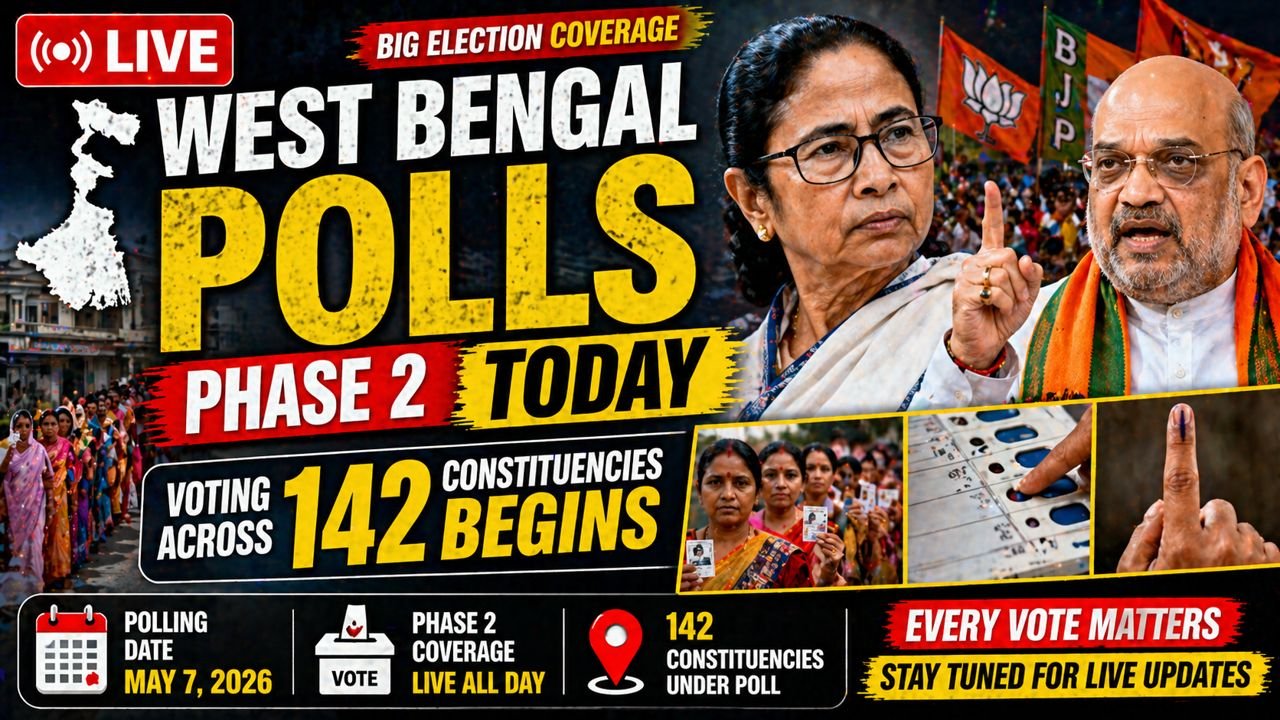
The second phase of the West Bengal Assembly elections has officially begun today, with voting taking place across 142 constituencies. This phase is considered one of the most crucial in the election cycle, as it covers a large number of seats and includes several politically significant regions.
Polling started early in the morning under strict security arrangements, with election authorities aiming to ensure a smooth and fair voting process.
Voting Begins Across Key Constituencies
Voters across 142 constituencies headed to polling stations to cast their votes. The Election Commission has made extensive arrangements to manage the large-scale voting process, including setting up polling booths, deploying staff, and ensuring accessibility for all voters.
This phase includes both urban and rural regions, making it a diverse electoral contest with varied local issues influencing voter decisions.
Tight Security in Place
Given the importance of this phase, security has been significantly strengthened. Central forces, along with state police, have been deployed in sensitive and high-risk areas.
Authorities are closely monitoring polling stations to prevent any untoward incidents. Measures such as CCTV surveillance and quick response teams have been put in place to maintain law and order.
Key Political Contest
The election sees a strong contest mainly between the Trinamool Congress (TMC) and the Bharatiya Janata Party (BJP), with other parties also trying to make their presence felt.
Both major parties have intensified their campaigns in these constituencies, focusing on local development issues, governance, and voter outreach. The results of this phase are expected to play a major role in shaping the overall outcome of the election.
Voter Participation Expected to Rise
Early trends suggest a steady turnout, with voters arriving at polling stations since morning. Election officials expect the voter turnout to increase as the day progresses, following the usual pattern seen in previous elections.
Special arrangements have been made to assist elderly voters and persons with disabilities, ensuring that everyone can participate in the democratic process.
Key Issues Influencing Voters
Several factors are influencing voter choices in this phase:
- Development and infrastructure
- Employment opportunities
- Local governance and public services
- Price rise and cost of living
These issues are expected to play a decisive role in determining voting patterns across constituencies.