

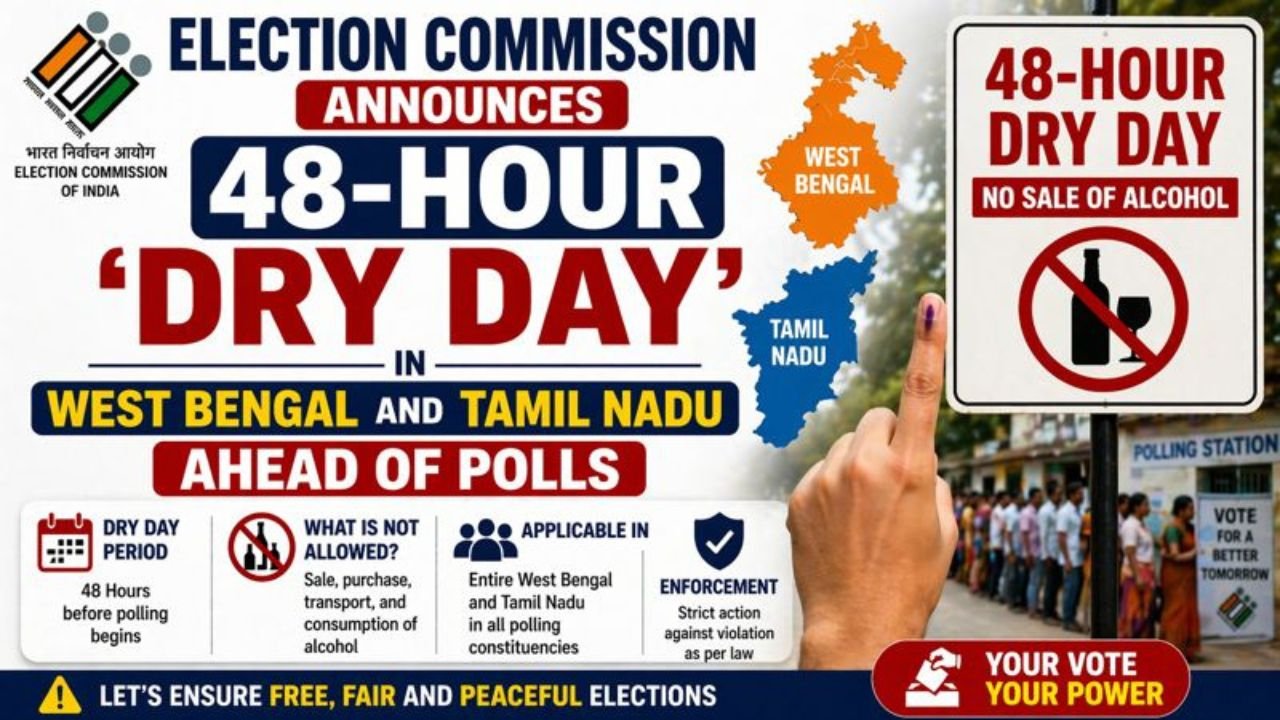
The Election Commission of India has officially declared a 48-hour dry day in both West Bengal and Tamil Nadu ahead of the upcoming elections. This decision is part of the strict measures taken to ensure fair voting conditions and maintain public order. The rule will restrict the sale and distribution of alcohol during a specific period before voting begins. The move is aimed at reducing the chances of disturbance, influence, or illegal activities that could affect the election process.
Why the Election Commission announced a 48-hour dry day
The main reason behind the Election Commission announces 48-hour dry day is to create a peaceful and controlled environment before voting. Alcohol consumption can sometimes lead to conflicts, violence, or attempts to influence voters unfairly. By banning alcohol sales, authorities aim to reduce such risks.
Legal framework and enforcement
The dry day rule is enforced under the guidelines provided by the Election Commission of India. Local authorities, including police and district administration, are responsible for implementing this order. Liquor shops, bars, restaurants, and clubs are required to remain closed during this period.
Impact on West Bengal and Tamil Nadu
The Election Commission announces 48-hour dry day, which directly affects businesses related to alcohol sales. Shop owners, bar managers, and hotel operators often see a drop in revenue during this time. However, since this rule is expected during elections, most businesses prepare in advance.
Public response and awareness
People in West Bengal and Tamil Nadu are generally aware of such restrictions during elections. Many citizens plan ahead and adjust their routines accordingly. Public awareness campaigns by authorities also help inform people about the dry day schedule and its importance.
Role of dry days in ensuring fair elections
One of the biggest concerns during elections is the possibility of voters being influenced through illegal means. Alcohol distribution has been used in the past to sway voters. By implementing a dry day, the Election Commission reduces such chances significantly.
Maintaining peace and security
The Election Commission announces 48-hour dry day to help maintain peace in sensitive areas. Alcohol-related incidents can sometimes lead to violence or unrest, especially during politically charged times. By restricting alcohol sales, authorities can better manage security situations.
Simple explanation of the dry day rule
| Topic | Simple Explanation |
|---|---|
| What is dry day | No alcohol sale allowed |
| Duration | 48 hours before voting |
| Where applied | West Bengal and Tamil Nadu |
| Who must follow | Liquor shops, bars, hotels |
| Reason | Keep elections fair and peaceful |
| Government action | Shops closed, strict checking |
| If rules broken | Fine or legal punishment |
| Impact on people | No buying alcohol for 2 days |
| Impact on business | Temporary loss in sales |
| Benefit | Safe and fair voting |
Importance of following election rules
Citizens play a key role in ensuring that elections are conducted smoothly. Following the dry day rule is part of this responsibility. People are encouraged to respect the guidelines and support the efforts of the Election Commission.
Cooperation with authorities
Local authorities depend on public cooperation to enforce rules effectively. When people follow the guidelines, it becomes easier to maintain order and ensure that the election process is not disrupted.
Conclusion
The Election Commission announces 48-hour dry day in West Bengal and Tamil Nadu as an important step to ensure fair and peaceful elections. Although it may cause temporary inconvenience to some individuals and businesses, the larger goal is to protect the integrity of the voting process. By restricting alcohol sales, authorities reduce the chances of violence, disturbance, and voter influence. This rule reflects the commitment of the Election Commission to maintain transparency and discipline during elections. Citizens are expected to cooperate and follow these guidelines, as their participation is crucial in building a strong democratic system. When everyone works together, elections can be conducted smoothly, allowing voters to make their choices freely and confidently.