

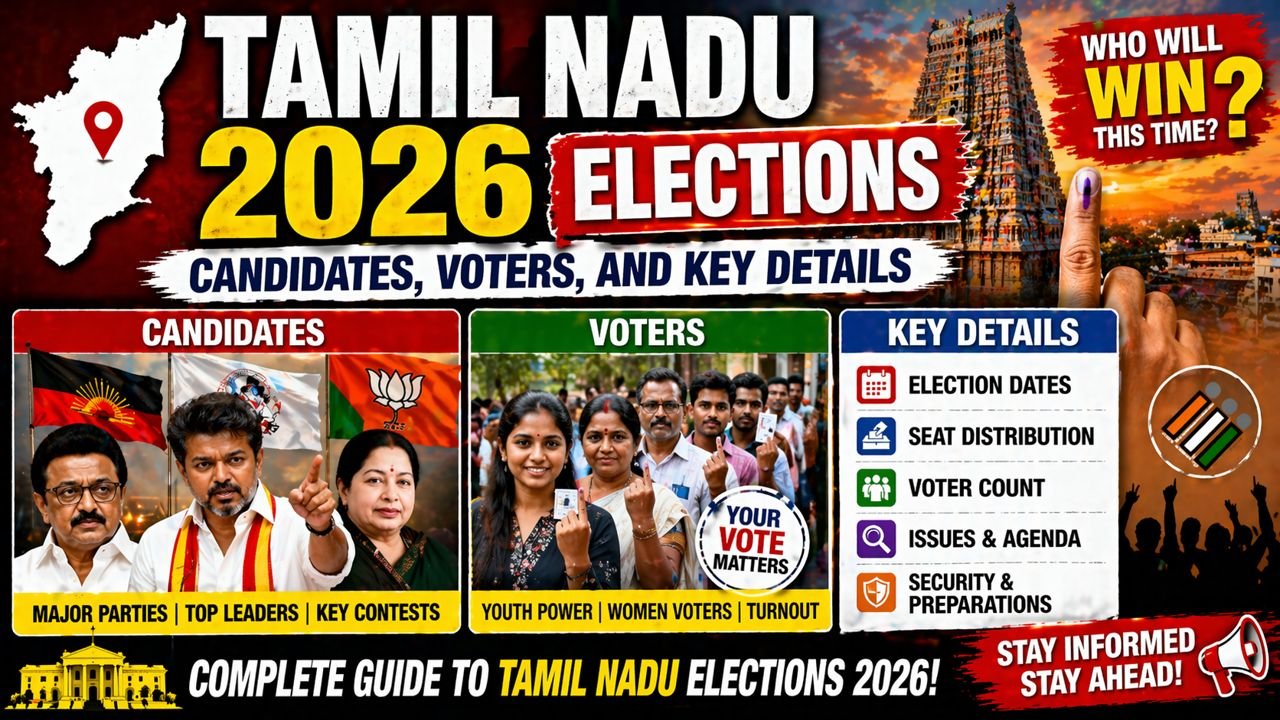
The upcoming Tamil Nadu 2026 Elections are shaping up to be one of the most closely watched political events in Tamil Nadu. With millions of voters preparing to take part, the political atmosphere is already active with campaigns, debates, and public discussions. These elections will decide the future leadership of the state and influence major policies that affect everyday life, including jobs, infrastructure, education, and welfare schemes.
Overview of Tamil Nadu 2026 Elections
The Tamil Nadu 2026 Elections will decide the members of the Legislative Assembly. The state has a long history of strong regional politics, with major parties competing intensely. This election is expected to see participation from established political leaders as well as new faces trying to gain public support.
The voting process will involve millions of eligible citizens across urban and rural areas. Election authorities are preparing to ensure smooth and fair voting through updated systems and security measures.
Candidates in Tamil Nadu 2026 Elections
Major Political Parties and Leaders
The Tamil Nadu 2026 Elections will feature candidates from major parties such as DMK, AIADMK, BJP, and Congress, along with several regional and independent candidates. Each party is focusing on selecting candidates who can connect with local voters and address their concerns.
New Faces and Young Leaders
Apart from experienced politicians, the Tamil Nadu 2026 Elections are also seeing the entry of young candidates. These new leaders are focusing on modern issues such as employment, digital growth, and education reforms. Their presence is expected to bring fresh ideas and attract younger voters.
Voters in Tamil Nadu 2026 Elections
The Tamil Nadu 2026 Elections will include a large number of registered voters. The voter list is regularly updated to include new voters and remove duplicates. Special efforts are being made to encourage first-time voters to participate.
Youth and Women Participation
Young voters are expected to play a major role in the Tamil Nadu 2026 Elections. Their preferences can influence the final outcome significantly. At the same time, women voters are also becoming more active, focusing on issues like safety, healthcare, and financial support programs.
Election Process and Important Details
Voting System
The Tamil Nadu 2026 Elections will use electronic voting machines to ensure quick and accurate counting. Authorities are also planning awareness campaigns to educate voters about the voting process.
Security and Fairness
Election officials are focusing on maintaining fairness during the Tamil Nadu 2026 Elections. Security forces will be deployed to prevent any disturbances and ensure a peaceful voting environment.
Tamil Nadu 2026 Elections Explained in Simple Table
| Topic | Simple Explanation |
|---|---|
| Tamil Nadu 2026 Elections | Big election where people choose their state leaders |
| Candidates | People from different parties trying to win votes |
| Voters | Citizens who are eligible to vote |
| Youth Role | Young people voting for the first time |
| Women Voters | Women choosing leaders based on their needs |
| Main Issues | Jobs, roads, education, hospitals |
| Voting Method | Machines used to cast votes easily |
| Election Safety | Police and rules to keep elections fair |
| Campaigns | Leaders meeting people and asking for votes |
| Result Impact | Decides future government and policies |
Dravida Munnetra Kazhagam (DMK)
- Likely Chief Candidate: M. K. Stalin (Chief Minister face)
- Other key leaders may include senior ministers and sitting MLAs
All India Anna Dravida Munnetra Kazhagam (AIADMK)
- Expected leadership: Edappadi K. Palaniswami (EPS)
- Strong candidates from traditional AIADMK constituencies
Bharatiya Janata Party (BJP)
- Expected state leadership candidates from alliance partners
- Focus on urban and selected rural constituencies
Tamil regional parties / alliances
- Smaller parties aligned with DMK or AIADMK
- Candidates depend on seat-sharing agreements
New/Independent Candidates
Often strong in regional or issue-based areas
Local leaders and independent contestants in various constituencies