

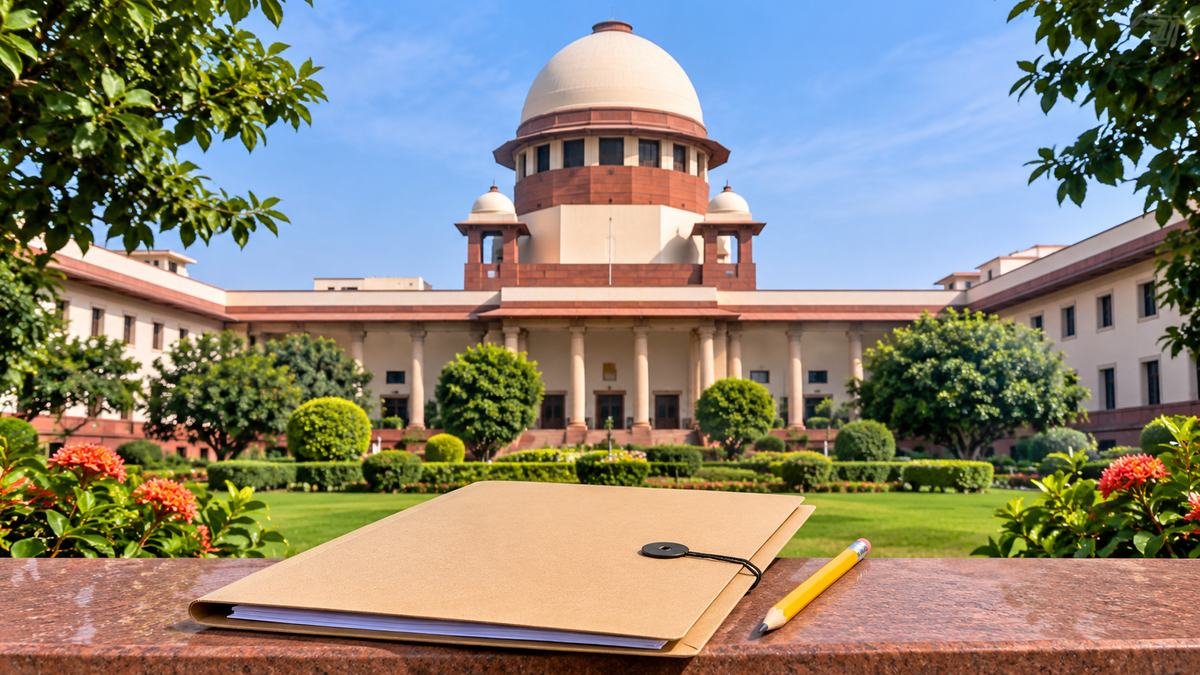
The Supreme Court Junior Court Attendant recruitment 2026 is open for 130 tentative posts. The application closes at 11:55 p.m. IST on 25 November 2026. The Registry has tentatively scheduled the objective test for 26 December 2026. Check the qualification ceiling before applying. The advertisement sets Class 10 as the minimum and Class 12 or 10+2 as the maximum. Open the official application link notice.
Junior Court Attendant is a Group C non-clerical post. The starting basic pay is ₹21,700 at Pay Level 3. The role includes handling files and records and carrying out office support duties in the Registry. Read the official recruitment advertisement.
Application, test and answer-key dates
| Event | Date and time |
|---|---|
| Online application opening | 4 November 2026, 10 a.m. IST |
| Closing time for online applications | 25 November 2026, 11:55 p.m. IST |
| Objective test | 26 December 2026, tentative |
| Proposed answer key release | 28 December 2026 |
| Proposed objection window | 28–29 December 2026, closing at 11:55 p.m. IST |
| Test reporting time and interview schedule | To be issued by the Supreme Court |
The test date is tentative in the advertisement. Use the admit card for the reporting time, venue and instructions. The answer-key and objection schedule also depends on the examination taking place as planned.
Who can apply for Junior Court Attendant?
The advertisement invites Indian citizens that meet the specified qualifications and eligibility conditions as of 1 October 2026. Candidates must have passed at least Class 10 through a board or institute recognised by the government. The highest permitted qualification is Class 12 or 10+2 from a recognised board or institute. This qualification range matters if you have completed further studies.
Candidates must generally be 18 to 27 years old on 1 October 2026. The notice provides age relaxation for eligible categories under applicable rules and lists additional provisions for certain applicants. Check the qualification and age sections together if you intend to claim a relaxation. Have the relevant category certificate ready before starting the application.
Supreme Court Junior Court Attendant application fee
| Applicant category | Non-refundable fee |
|---|---|
| General or unreserved | ₹1,500 |
| Eligible SC, ST, OBC non-creamy layer, ex-servicemen and candidates with disabilities | ₹750 |
Applicable bank charges are extra. Make the payment online through the gateway linked from the recruitment form. Keep the transaction confirmation with your application number so you can identify the payment if your account status needs checking.
How to apply online
- Open the Supreme Court recruitment page and choose the Junior Court Attendant advertisement and its application link.
- Register using a personal mobile number and email address you can access during the recruitment.
- Enter your education, date of birth and category information as shown on the prescribed records. Read the city’s entry in the exam-centre annexure before setting your preferences.
- Upload the photo, signature, school certificates and any applicable category or disability certificate. Follow the size and format instructions displayed in the form.
- Review the preview, submit the application and complete online payment. Save the final form, application number and receipt.
The Registry offers both Junior Court Attendant and Junior Court Assistant notices. Match the job title on the form to the 130-vacancy Attendant advertisement before you pay. The Attendant form locks the submitted details, so check spelling, dates and category before you confirm. Go to Supreme Court recruitments.
Check your city preferences before submitting
The application asks you to rank exam cities from the list in Annexure A of the advertisement. Choose locations you can reach even if the reporting time is early. The Registry can allocate a different city for administrative reasons. Confirm the final venue from the admit card before booking travel. If a name or surname has changed since your school certificate was issued, the advertisement specifies a gazette notification as supporting evidence. Check those details and the document upload instructions together while your form is still editable.
What is the exam pattern?
The objective test has 100 multiple-choice questions for 100 marks and a standard duration of 90 minutes. It will be conducted in English. The notice gives an equal split across General Intelligence and Reasoning, Numerical Aptitude, General English and General Awareness, with 25 questions per section.
| Selection stage | Maximum marks | Minimum qualifying marks |
|---|---|---|
| Objective test | 100 | 50 |
| Interview | 25 | 13 |
Each correct answer carries one mark and each incorrect answer deducts 0.25 marks. If a large number of applicants clear the objective test, the advertisement provides for interview shortlisting by merit at a 1:3 ratio against tentative vacancies. The interview schedule will follow separately. Admission to the test and interview is provisional until the Registry verifies the supporting documents.
How to get the admit card and raise an objection
Keep your application number handy. Once the Supreme Court posts the Junior Court Attendant admit card link, sign in and download the relevant card. Check the reporting time against your venue and plan travel using the centre on the card.
If the proposed answer-key timetable holds, an objection can be filed online during the stated window. The notice lists a ₹100 fee per objection, refundable if the objection is found valid. Keep any evidence for the particular question ready and use the question and shift details shown in the official response window.
What to retain for document verification
Keep the originals of your school records and any documents you used to claim an age or category benefit. The name, date of birth and other particulars should agree with the application. Candidates in government or specified public-sector employment should check the advertisement’s requirement for a no-objection certificate. Save a copy of the recruitment notice with your form so you can trace the applicable terms when the Registry calls you for verification.