

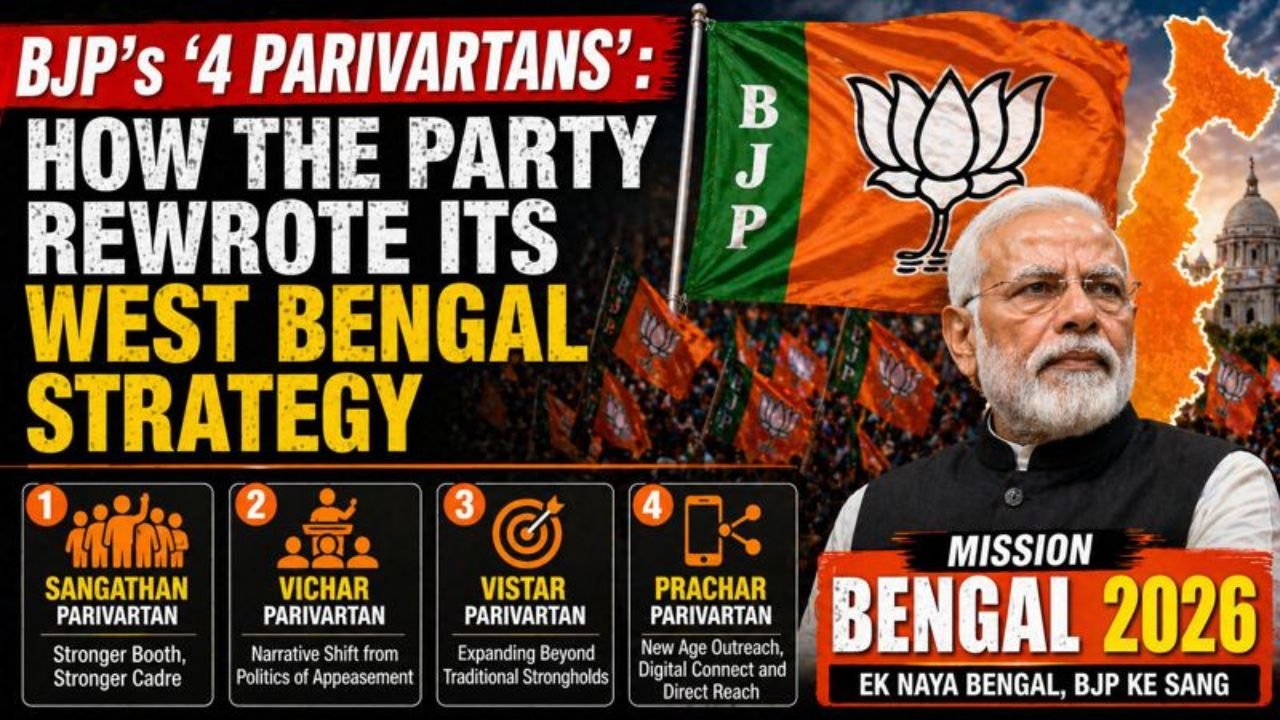
The political landscape of West Bengal has always been dynamic, shaped by shifting alliances, leadership styles, and voter expectations. In recent years, the Bharatiya Janata Party has made significant efforts to expand its influence in the state. One of the most talked-about approaches is BJP’s ‘4 Parivartans’, a strategy designed to reshape how the party connects with voters and competes politically. This strategy reflects a deeper transformation in messaging, organization, leadership outreach, and voter engagement.
The First Parivartan: Messaging Shift
From National to Local Issues
One of the biggest changes under BJP’s ‘4 Parivartans’ is the shift in communication. Earlier, the party focused heavily on national topics, but now it emphasizes local issues such as employment, infrastructure, and law and order in West Bengal.
Emotional and Cultural Connect
The BJP has also tried to build a stronger cultural connection with the people of the state. By highlighting regional pride, traditions, and local heroes, the party aims to present itself as a force that understands Bengal’s identity rather than an outsider.
The Second Parivartan: Organizational Strengthening
Building Grassroots Networks
Another major aspect of BJP’s ‘4 Parivartans’ is strengthening its grassroots presence. The party has invested in expanding its local units, training workers, and ensuring that its message reaches even remote areas.
Booth-Level Management
Special attention has been given to booth-level organization. By focusing on small voting units, the BJP aims to ensure better voter contact, improved turnout, and stronger local support.
The Third Parivartan: Leadership Visibility
Increased Presence of Top Leaders
Under BJP’s ‘4 Parivartans’, senior leaders, including Narendra Modi, have increased their visits and interactions in West Bengal. This has helped the party gain visibility and show commitment to the state.
Local Leadership Development
At the same time, the BJP is promoting local leaders to build trust among voters. This balance between national leadership and regional representation is a key part of the strategy.
The Fourth Parivartan: Targeted Voter Outreach
Reaching New Voter Groups
The BJP has expanded its focus to include different sections of society such as youth, women, and marginalized communities. By addressing their specific needs, the party aims to widen its support base.
Use of Technology and Data
Modern tools like data analytics and digital campaigns play a big role in BJP’s ‘4 Parivartans’. These tools help the party understand voter behavior and create personalized communication strategies.
How BJP’s ‘4 Parivartans’ Changed Campaign Style
More Localized Campaigns
Campaigns are now designed with a local focus, including region-specific slogans, events, and issues. This makes the messaging more relatable to voters in West Bengal.
Continuous Engagement
Instead of limiting efforts to election periods, the BJP is maintaining continuous engagement with the public. This helps build long-term relationships and trust.
Simple Table Explaining BJP’s ‘4 Parivartans’
| Parivartan Area | What It Means | Simple Explanation |
|---|---|---|
| Messaging Change | Focus on local issues | Talk about jobs, roads, and safety in Bengal |
| Organization Strength | Strong local teams | Build teams in every area to reach people |
| Leadership Visibility | Leaders meet people | Big and local leaders visit and connect |
| Voter Outreach | Target more groups | Reach youth, women, and all communities |
Challenges Faced by BJP’s ‘4 Parivartans’
Strong Regional Competition
The presence of powerful regional leaders like Mamata Banerjee makes it challenging for the BJP to gain dominance in the state.
Cultural and Political Differences
West Bengal has a unique political culture, and adapting to it requires time and consistent effort. BJP’s ‘4 Parivartans’ is an attempt to bridge this gap, but results depend on long-term execution.
Impact on West Bengal Politics
Increased Political Competition
BJP’s ‘4 Parivartans’ has intensified political competition in West Bengal, making elections more closely contested.
Changing Voter Expectations
Voters are now seeing more options and expecting better governance, development, and accountability from all parties.